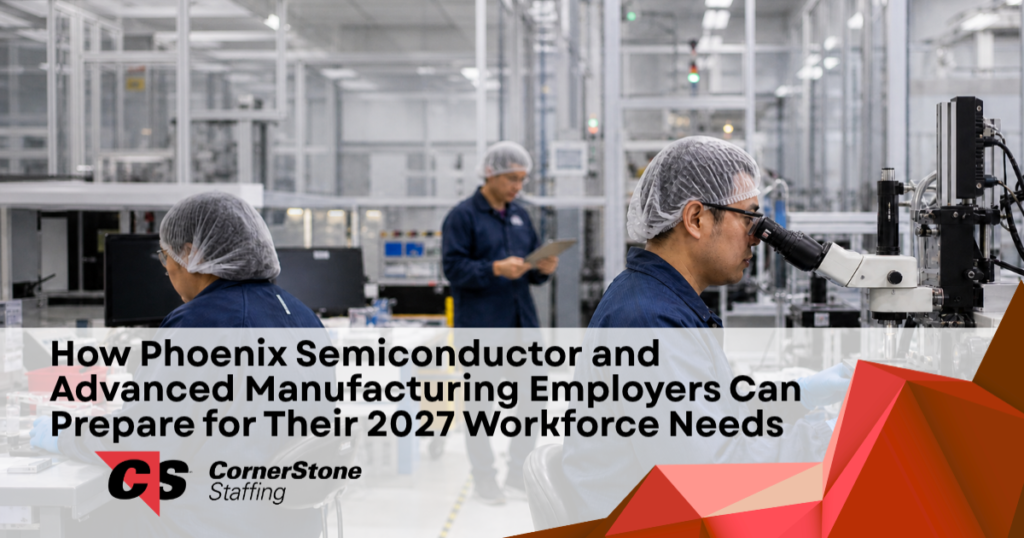
Phoenix-area semiconductor suppliers and advanced manufacturers are planning for 2027 while competing for a limited pool of skilled talent. The north Phoenix fab expansion is drawing experienced workers toward large projects, and a projected statewide shortage means the gap won’t close on its own. Employers who start workforce planning well before positions open will be in a stronger position to hire.
The North Phoenix Fab Expansion Is Raising Competition for Engineers
TSMC’s planned expansion in north Phoenix includes four new chip fabrication plants, adding to the billions the company has already invested in the region. A 2026 report from the Rounds Consulting Group projects Arizona will fall about 10,000 skilled workers short each year, with the gap growing annually. That pressure extends well beyond TSMC to the suppliers and manufacturers recruiting from the same talent pool, especially for electrical, chemical, industrial, and manufacturing engineers.
Smaller employers often feel this competition first. A strong engineer may be weighing several offers, and a slow hiring process can lose that candidate before the second interview.
Employers who wait for a vacancy before they start recruiting often end up choosing between speed and fit. Planning ahead removes that trade-off.
Forecast Hiring Needs Before Positions Open
Early forecasting turns a reactive search into a planned one. Start with your production schedule and work backward to the people it requires.
- Match each planned line, shift, or customer program to the roles it needs.
- Identify positions that have been hardest to fill, particularly in engineering.
- Account for expected retirements, promotions, and turnover alongside new growth.
- Set recruiting timelines based on how long similar searches have taken in the past.
Share the forecast with operations, finance, and your recruiting partners so everyone works from the same plan.
Widen the Talent Pool Through Transferable Skills
Requiring prior semiconductor experience for every role shrinks an already small talent pool. Separate the skills a new hire needs on day one from the ones your team can teach.
For example, if a search for a manufacturing engineer with semiconductor experience stalls, consider rewriting the requirements around process control, quality documentation, and equipment troubleshooting. That opens the search to engineers from other precision manufacturing settings who can learn product-specific details on the job.
The same approach works for support roles, such as administrative and customer service positions. Look at work history, certifications, and demonstrated skills, not just job titles.
Connect With Local Training Programs to Build a Steady Pipeline
Programs like ASU’s accelerated equipment technician training, developed with TSMC Arizona, are expanding the region’s pipeline of skilled workers. Employers who build relationships with local programs early can meet graduates before their competitors do.
- Introduce your company to program staff and explain the skills you hire for.
- Offer facility tours, guest speakers, or internships.
- Create entry-level roles with a clear path to advancement.
Strengthen Retention to Reduce Hiring Pressure
Every skilled employee who leaves adds another search in a crowded market. Retention is one of the most direct ways to reduce future hiring needs.
- Review pay and schedules against what competing employers offer.
- Provide structured onboarding and a named point of contact for new hires.
- Show engineers and support staff where they can grow within your organization.
- Ask current employees what would keep them, then act on what you hear.
Use Direct Hire, Temp-to-Hire, and Temporary Support Where Each Fits
No single hiring model fits every role. Matching the model to the position protects both quality and flexibility.
Direct Hire for Engineering and Leadership Roles
With direct hire, the employee joins your payroll from day one. It’s the best fit for electrical, chemical, industrial, and manufacturing engineers, where candidates expect a permanent offer and long-term fit matters most.
Temp-to-Hire for Evaluating Fit on the Job
With temp-to-hire, a candidate starts on assignment and moves to your payroll once both sides confirm the match. It works well for support roles where reliability and fit are best judged on the job.
Temporary Support for Ramp-Ups and Coverage
Temporary support covers production surges, special projects, and leave coverage without a long-term commitment.
Frequently Asked Questions About Semiconductor Hiring in Phoenix
When should Phoenix manufacturers start hiring?
Start now. Engineering searches in a competitive market often take longer than planned, so forecasting and outreach should begin well before positions open.
Which roles will be hardest to fill?
Electrical, chemical, industrial, and manufacturing engineers face the most competition, driven by the fab expansion and the projected statewide shortage of skilled workers.
How do transferable skills apply to semiconductor hiring?
Transferable skills are abilities gained in one setting that carry over to another, such as process discipline, quality practices, and equipment troubleshooting. Hiring for them lets you consider qualified candidates from related manufacturing backgrounds.
When is temp-to-hire a better choice than direct hire?
Temp-to-hire works best when on-the-job performance tells you more than an interview can. Direct hire is usually the better choice for engineers and other roles where candidates expect a permanent offer.
How can a staffing partner support a workforce plan?
CornerStone Staffing’s Phoenix recruiters specialize in engineering and professional placement, helping employers plan for and fill hard-to-staff roles.
Enter 2027 With the Team Your Production Plan Depends On
Competition for skilled talent in Phoenix isn’t likely to ease soon. Employers who forecast early, hire for transferable skills, invest in retention, and match the right hiring model to each role will be better positioned to meet their production commitments.
Ready to plan your hiring?
Contact a CornerStone Staffing recruiter in Phoenix to review your forecast and build a plan that uses direct hire, temp-to-hire, and temporary support where each fits best.